


Brief Conclusions
Ivan Safonov and Orion Solutions conducted an investigation into court documents from businessman Farkhad Teymurovich Akhmedov's case against the Council of the European Union. Their findings reveal a troubling pattern in how sanctions decisions are made. The analysis demonstrates that:
- The EU Council, when evaluating whether individuals meet the criteria for sanctions, relies exclusively on publicly available internet sources—including Wikipedia, news articles, and questionable tabloid websites.
- The credibility, relevance, and authority of information sources are not properly verified, which can lead to erroneous conclusions.
- Failing to actively manage one's digital presence can leave entrepreneurs vulnerable to unfounded sanctions.
- The process of challenging sanctions is lengthy and complex and can cause significant damage to business and reputation even if restrictions are subsequently lifted.
- Businessmen’s digital footprints can determine their fate and impact their business development. Carelessness online can have irreversible consequences. Every news item that mentions you, every social media post are potential weapons against you and your assets.
These conclusions underscore the need for a more thorough approach to gathering and analyzing information when making sanctions decisions, as well as the importance of managing Google and Yandex search results.
Introduction
In the era of digital technology and global economic interconnections, a businessman's authority can be created or destroyed with a single mouse click. Yet few entrepreneurs realize just how significant the impact of their digital footprint can be on their business life. A recent court case between a Russian businessman and the Council of the European Union sheds light on a disturbing trend: analysts (or compliance officers?) are using unverified information from open internet sources to make serious decisions about sanctions. This case was initiated by Akhmedov, a Forbes list member.
Analysis of the EU Council's Evidentiary Basis
A thorough examination of the materials presented by the Council of the European Union as justification for sanctions against Farkhad Akhmedov revealed a number of critical deficiencies in the gathering and assessment of information. The EU Council presented four files with evidence of Farkhad Akhmedov meeting the criteria for imposing restrictive measures against him [1].
According to the first grounds dated April 8, 2022 [2]:
Farkhad Akhmedov is a Russian businessman operating in the energy sector and in Russian regional politics. He founded Tansley Trading, which supplied equipment to Russian gas producers and became a minority shareholder in Northgas, an oil and gas company in Siberia, as well as Chairman of the Board of Bechtel Energy. He is close to the Kremlin and is a leading businessman operating in economic sectors that constitute a substantial source of revenue for the government of the Russian Federation.
According to amendments from February 6, 2023, the foundation was supplemented with the businessman's role in the Russian IT and forestry sectors.
Farkhad Akhmedov is a Russian businessman who has been involved in the energy sector and in Russian local politics. He founded Tansley Trading, which supplied equipment to Russian gas producers and became a minority shareholder in Northgas, an oil and gas company in Siberia. He is reportedly close to the Kremlin and was a leading businessman operating in economic sectors providing a substantial source of revenue to the government of the Russian Federation, which is responsible for the annexation of Crimea and the destabilization of Ukraine. He permanently resides in Russia and has permanent business interests in Russia, including in information technology and forestry.
We will examine each evidence file in detail to establish how well the documentation corresponds to the accusations and whether it can rightly serve as grounds for imposing sanctions.
First Evidence File
The foundation of the first file consisted of four sources with outdated information about the businessman and his assets. Moreover, the documentation of Akhmedov's guilt includes links from aggregator websites featuring kompromat articles, gossip, and rumors.
Wikipedia Excerpt
Using an open encyclopedia as a source for such serious decisions raises legitimate doubts. Despite the resource's popularity, anyone can edit it—all they need is internet access. In Akhmedov's case, the article contained outdated information about his business activities and political role.
Wikipedia allows you to track an article's revision history and find the version the Council referenced.
According to the article version from February 22, 2022, the excerpts confirm that the businessman is a significant figure in Russian politics and is close to the Kremlin [3].

While the fact of his work as a Senator from Krasnodar Krai is easily verifiable, the evidence of Akhmedov's significant role in resolving the Russian-Turkish conflict is not relevant, since the source link does not provide access to the article mentioning Akhmedov's role, but instead leads to the main page of the news outlet haqqin.az [4].
Akhmedov's inclusion in the "Kremlin Report" was based on his wealth exceeding $1 billion [5]. This is also stated on the U.S. Department of Treasury website itself, where the methodology, as shown in the screenshot, clearly specifies the wealth criterion of $1 billion.

The screenshot from this document shows that the list does not constitute a directive for imposing restrictive measures against those named in it.

The following Wikipedia section served as evidence that Akhmedov is a "leading businessman operating in economic sectors that constitute a substantial source of revenue for the government of the Russian Federation".

The Wikipedia screenshot shows no clear indication that Akhmedov, as Chairman of Northgas's board, constituted a substantial source of revenue for the Russian Federation. The fact that he sold assets to state-affiliated companies (NOVATEK and Gazprom) can hardly be considered a contribution to Russia's revenues. Given that Akhmedov sold all his oil and gas assets in the 2000s, there is no basis for claiming these sales played a role in the "Crimean Spring" events of 2014.
Forbes Profile Screenshot
Forbes is undoubtedly an authoritative financial publication. However, the profiles of businessmen on the site are not always up-to-date. In Akhmedov's case, his profile was created in 2012 and contained standard information typical of business publications: assets, net worth, career path, place and year of birth, citizenship [6].

However, this profile was essentially not updated since 2012 (like many others). New information about Akhmedov was published only in 2017, after a complete redesign of the website. At that time, a factual error regarding his role in Bechtel Energy was added to Akhmedov's profile, which led to an incorrect assessment of his current position in the business community [7].

At the time the court accessed it on March 10, 2022, the article contained a typo stating that in 1998 the individual purchased 44% of shares from Bechtel Energy and became Chairman. However, in reality, Akhmedov became head of the company Northgas [8].
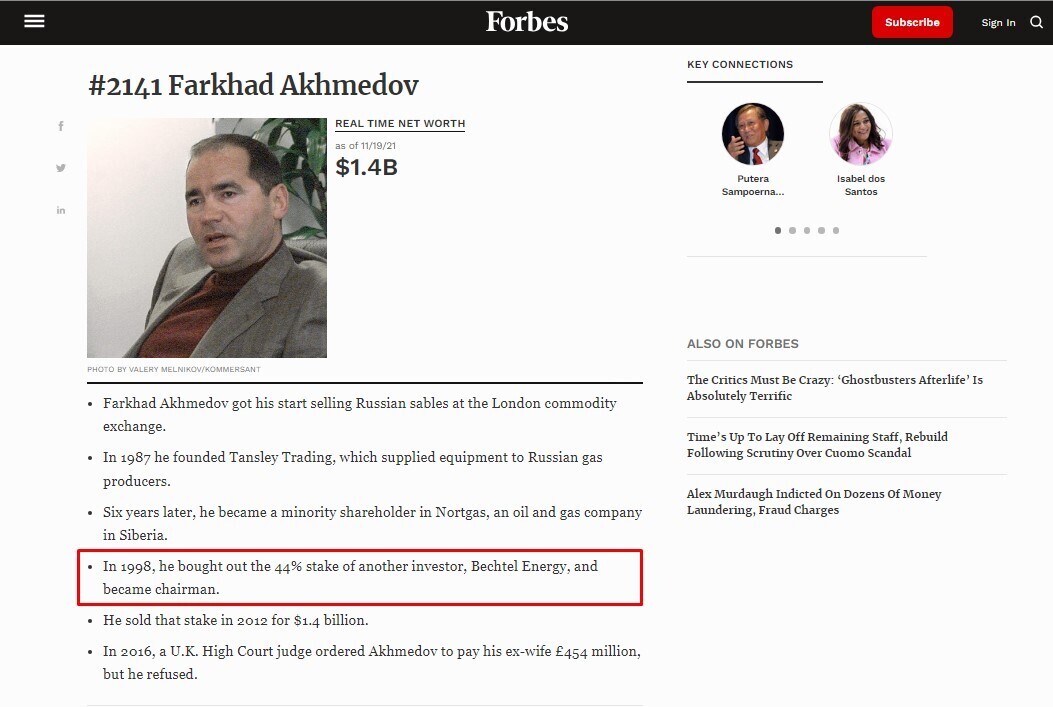
Thanks to the Internet Archive, we can see the differences between the March 10th, 2022 version and the current version of the article, which now correctly states that Akhmedov became Chairman of Northgas [9].

Excerpt from Rumafia.net
Using a resource that specializes in publishing unverified and often "sensational" information as evidence in an official investigation raises serious concerns. Rumafia.net is not a registered media outlet and bears no responsibility for the accuracy of its publications [10].

The site features a "Dossier" section that provides brief biographies, career paths, and assets of individuals. For example, Akhmedov's dossier states that he holds the position of board member at CJSC Northgas, even though he sold the company in 2012 [11].

To dispute the Council's claim that Akhmedov remains an important entrepreneur for the Russian economy, he had to counter the assertions from the tabloid site Rumafia with legal documents proving that his company Tansley Trading changed its name to Farco Services in 1994 and was subsequently liquidated in 1999.
Screenshot of The Times Article
Although The Times is a respected publication, the article used as evidence focused on Akhmedov's divorce proceedings with no substantial information about his business activities or connections to the Russian government [12].

The article calls Farkhad Akhmedov a Russian oligarch but provides no information about his role in the Russian economy or politics. This was enough to convince the Council that the businessman met the criteria for imposing sanctions.
Second and Third Evidence Files
The subsequent evidence files provided by the EU Council continued the trend of relying on questionable sources.
Particularly noteworthy is the use of a screenshot from the AppStore as evidence of Akhmedov's business interests in Russia's IT sector. This approach to gathering evidence shows just how shallow the investigation was and how little effort went into understanding the actual state of affairs.
In addition to the screenshot, excerpts from journalistic articles were also used. For example, Farkhad Akhmedov's biography on 24SMI confirms this information. It also mentions another of Akhmedov's musical projects—creating a social network called Musicgram. These claims are not confirmed by any source, and the biography itself was written by journalists without Akhmedov's participation [13].

Equally questionable is the use of information from the legal entity aggregator list-org.com [14] to confirm Akhmedov's significant role in the IT sector. While this source contains official information, it fails to provide a complete picture of the scale and significance of the entrepreneur's business interests.
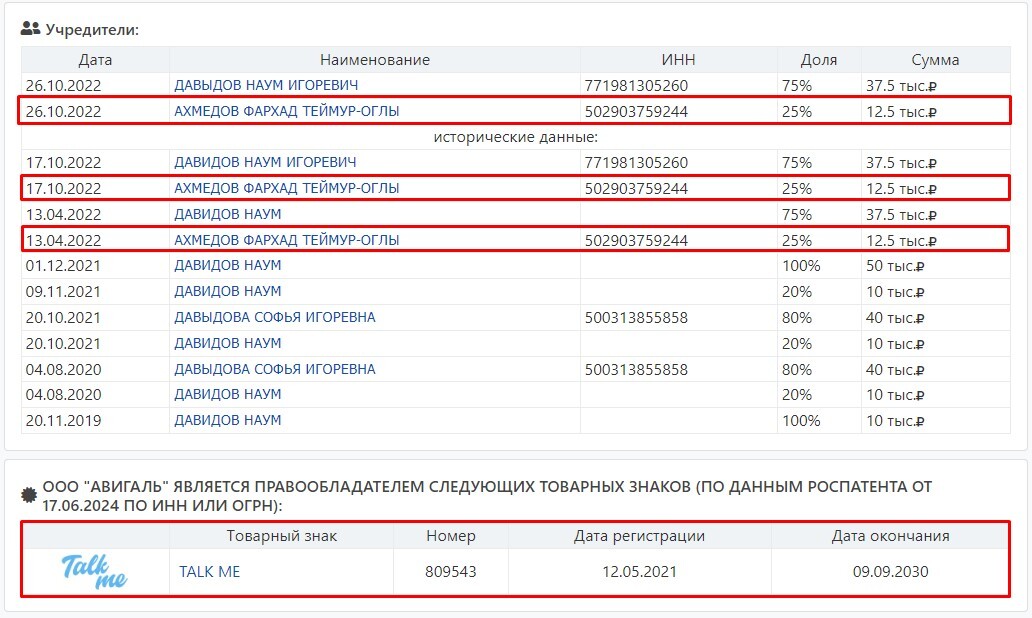
This screenshot shows that Akhmedov's stake is only 25%, making him a minority investor. To prove this, Akhmedov had to wait a year for a court hearing in London and provide legal documents, while the Council considered a screenshot from a Russian legal entity aggregator sufficient. Connections to the forestry sector were also confirmed by an excerpt from an article on regnum.ru [15].

This publication was enough for the Council to impose restrictions on Akhmedov. He also had to prove the insignificance of his company Udan LLC in court. Citing official documents, he proved that the company's revenue amounts to about 10,000 euros, which can hardly be considered a serious asset in Russia that supports the Russian economy.
Most Questionable Evidence
Among the materials presented by the EU Council, two sources stand out in particular, whose use in an official investigation raises serious questions about the methodology employed by European officials.
The first is an excerpt from a book by blogger and activist Seth Abramson [16]. Using a work of fiction based on the author's personal beliefs rather than factual data as evidence in an official investigation contradicts the principles of objectivity and reliability.
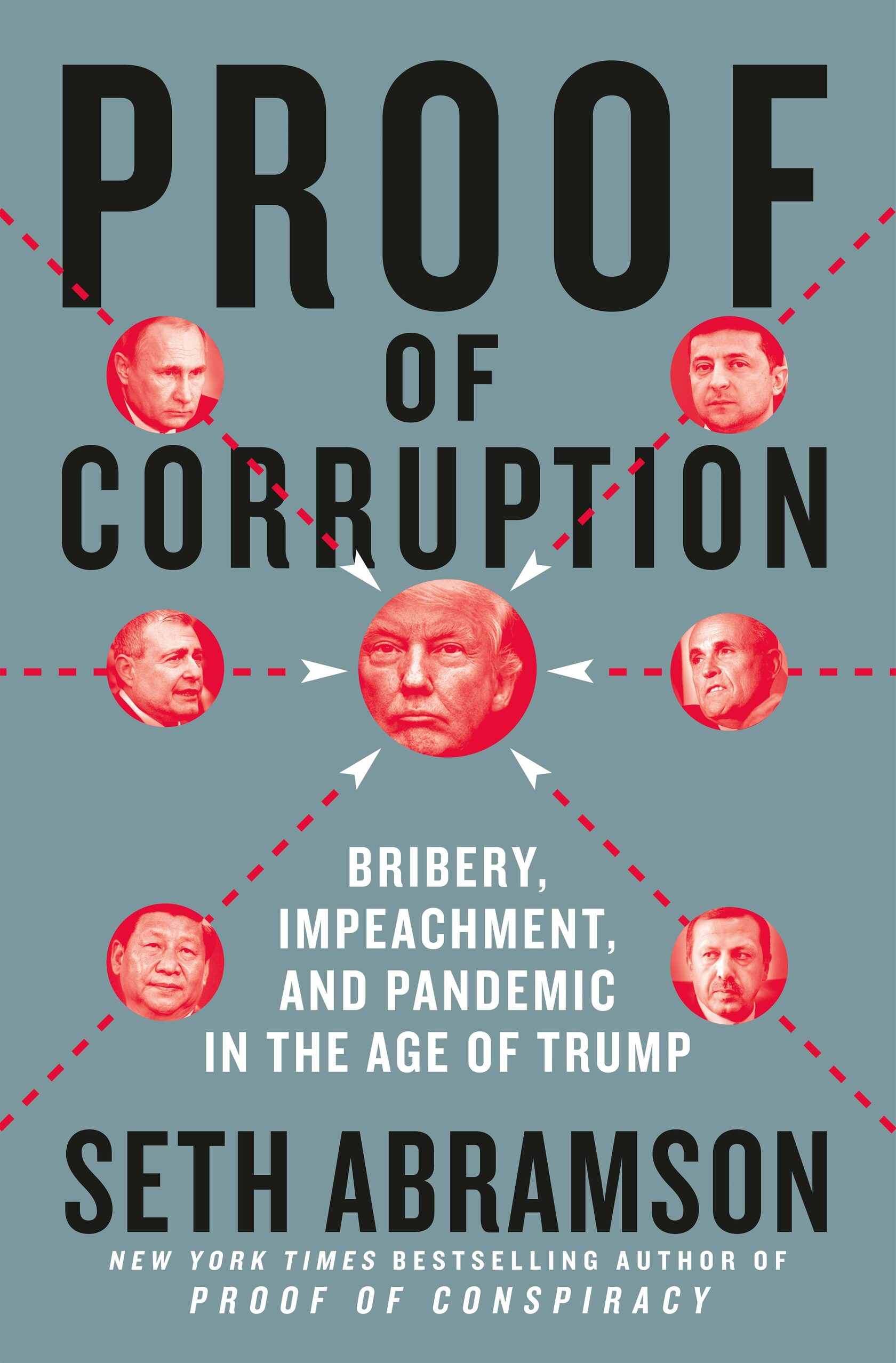
Seth Abramson opposes Donald Trump and claims that Russia helped Trump in his election campaign.
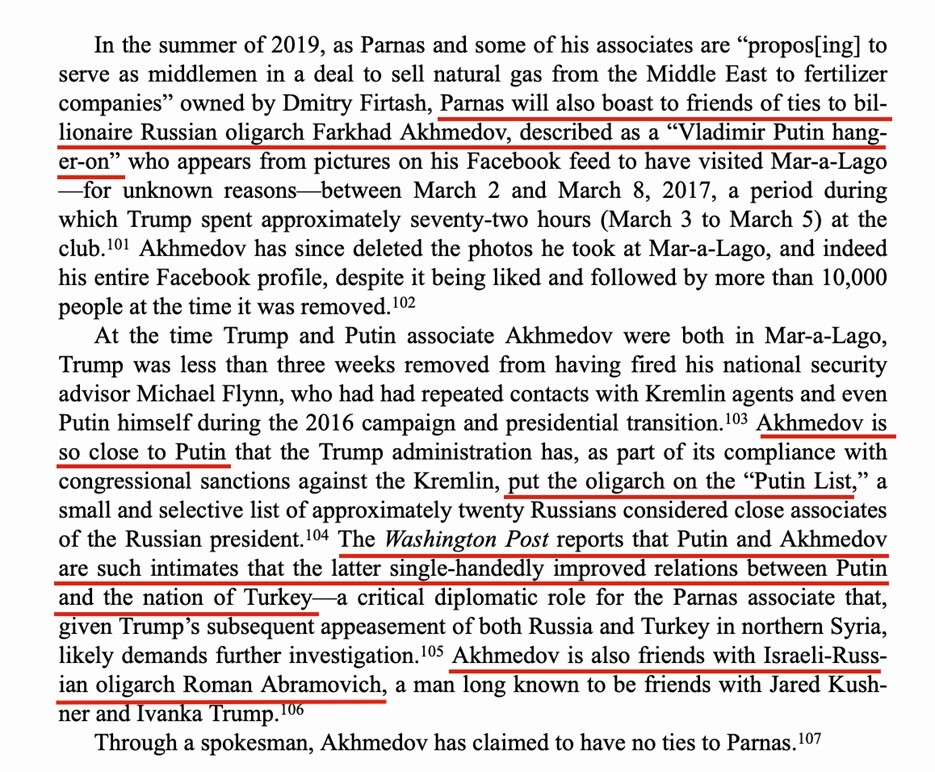
The third chapter mentions the closeness of Vladimir Putin and Farkhad Akhmedov, based on an article from the Washington Post [17]. However, there is no link to the article itself, and it can only be obtained from the author's personal website.

Claims about the Putin-Akhmedov connection are made based on an interview given by Turkey's Minister of Foreign Affairs, where he emphasized Akhmedov's important role in settling relations between Russia and Turkey. The link to this interview in the article itself does not work.

The Council's decision to classify Akhmedov as an important Russian businessman rested on labeling him an oligarch. Foreign media coverage of Akhmedov painted an unflattering picture for international audiences—the largest divorce case in UK history, his purchase of the world's largest yacht, references to him among "Putin-era oligarchs," and other stories. These publications shaped a negative image, particularly since Google searches returned scandal-focused articles on the first and second pages.
There was no information available online in English about who Farkhad Akhmedov is or what he does. We checked web archives for all company websites associated with Farkhad Akhmedov in the 2000s and 2010s. Only Russian sources had Information about him as Board Chairmen—foreign journalists and partners had no source for this information.
Farkhad Akhmedov's personal website was not translated until the early 2010s and disappeared entirely by the mid-2010s [18].
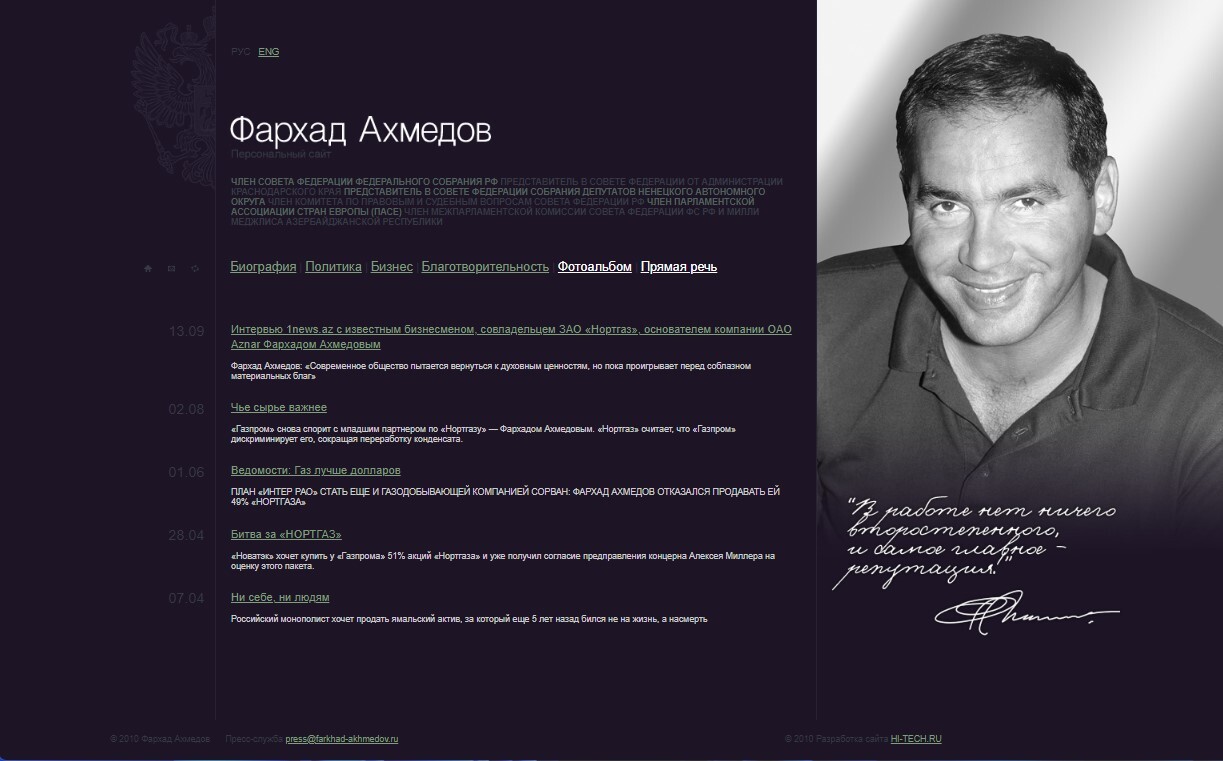
In 2017, scammers purchased the farkhad-akhmedov.ru site and used it to sell products for alcoholism treatment while impersonating the Russian Ministry of Health [19].
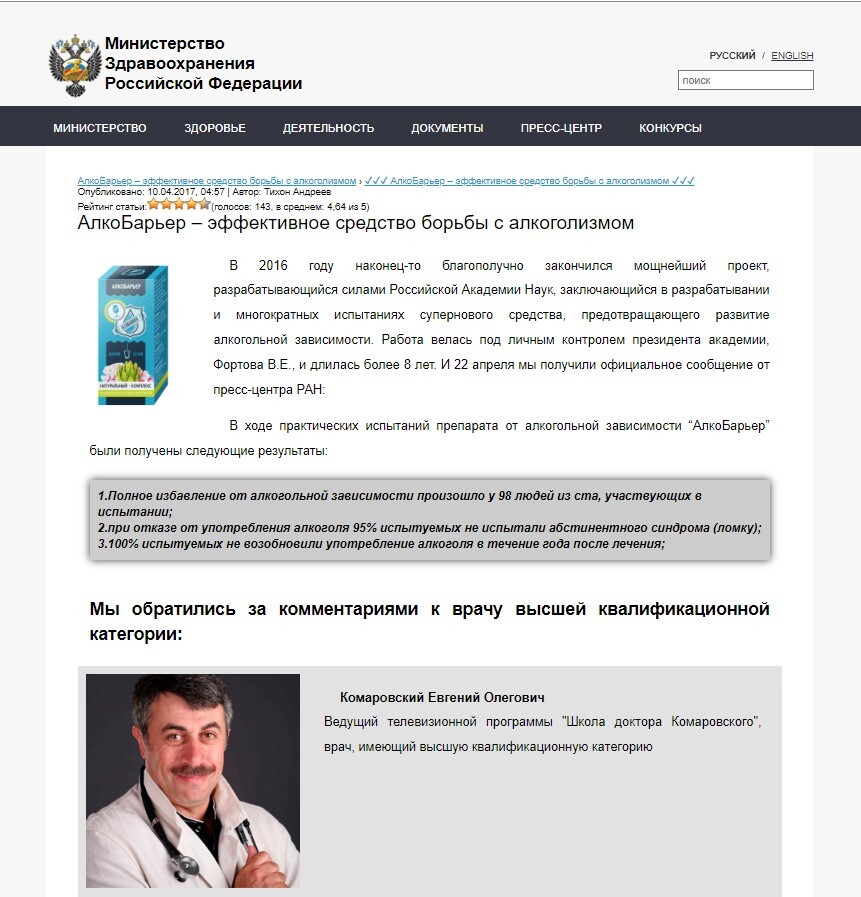
Today anyone can buy this site for $1.50 (119 rubles), and what appears there depends solely on the owner's wishes.

If you do not tell your own story, someone else will inevitably tell it for you.
The second questionable source is a link to presscentr.ru, which at the time of our research was inactive and listed for sale. Using information from such resources without verifying their reliability and relevance calls the entire investigative process into question.
Purchasing impressive-sounding domains and replacing their content is a popular practice among scammers. For example, the Council's decision to impose sanctions on Akhmedov references presscentr.ru [20]. Sites with such names typically belong to government organizations and publish informational materials, news, and press releases.
The site is now inactive and listed for sale.

However, at the time it was accessed, it could have contained information deliberately placed on a site with such an official-sounding name to serve as evidence of Farkhad Akhmedov's involvement in Russian politics.
Unfortunately, we have no data about what was on this site the day the Council accessed it, but the web archive history from other dates shows the site was never affiliated with government agencies and was almost always used by third parties either to resell the domain or host advertising.
Using the link analytics service Semrush, we know that this site had 3 backlinks. One was placed on the news site utro.ru and talks about a Voronezh student's court case, with the article authored by a fake persona, Lelya Razgonyaeva [21].

The Role of Digital Footprints in Sanctions Decisions
The analysis of Farkhad Akhmedov's case materials clearly demonstrates how significant a person's digital footprint has become in today's world. When official bodies rely on information from open internet sources, lack of control over one's online presence can have serious consequences.
Akhmedov's case shows that the absence of current and reliable information about a person in the public space creates an information vacuum that can be filled with unverified data or deliberately distorted information. Entrepreneurs whose past activities involved major projects or government structures are particularly vulnerable.
Consequences for Business and Reputation
The imposition of sanctions, even if they are subsequently recognized as unfounded, can cause irreparable damage to an entrepreneur's reputation and business. The process of challenging sanctions, as Akhmedov's experience shows, can take years, during which business activity is effectively paralyzed.
Moreover, the mere fact of being sanctioed, even temporarily, can lead to long-term negative consequences for business relationships and the investment appeal of projects associated with the sanctioned individual.
Conclusion
The investigation of materials from Farkhad Akhmedov's case against the Council of the European Union revealed serious problems in the sanctions decision-making process. Reliance on unverified internet sources, outdated information, and a lack of deep analysis of the actual situation create a dangerous precedent where any major entrepreneur could face the threat of unfounded sanctions.
This case should serve as a wake-up call for the business community about the need to actively manage its online reputation and digital presence. At the same time, it raises questions about the need to reform the process of collecting and analyzing information when making decisions about sanctions at the international level.
Research Methodology
For this study, we thoroughly examined the court materials in Farkhad Akhmedov's case against the EU Council, including four evidence files provided by the Council. The analysis included evaluating the information sources used by the Council, their credibility and relevance. Additionally, we investigated archived versions of websites and publications mentioned in the evidence.


