



In an era of widespread international sanctions, search engines have become the primary data source for Western officials: quick, convenient, no need to waste time fact-checking—after all, if something's written on the internet, it's automatically true. Russian banker Natalya Alymova has joined the ranks of those whom the US Treasury targeted with sanctions based on information from links on the first pages of search engines. The case of Natalya Alymova and Sberbank reads like a detective story where the main character isn't a person, but their digital shadow.
Picture this: you quit your job, and ten days later foreign officials slap sanctions on you for your connection to that very job. Absurd? For former Sberbank top executive Natalya Alymova, this was a reality. Canadian officials managed to add her to their blacklists nearly two weeks after she'd left the bank. The problem? This development in her employment status simply wasn't reflected on the first pages of search engines.
Natalya Alymova, hit with US and Canadian sanctions, was hostage to her own informational silence. While she kept quiet about her career changes, Western officials wrote her biography themselves—with all the resulting international consequences. Orion Solutions experts analyzed this case in detail and identified key moments where proper Digital Profile management could have dramatically changed the course of events.
Natalya Andreyevna Alymova: Sberbank Top Executive and Sanctions After She Quit
Spring 2022 brought a wave of mass sanctions. Natalya Alymova—head of Sberbank's Wealth Management division—got swept up in the classic pattern: February 24 saw the US and Canada target Sberbank itself, then May 8 brought sanctions against its top executives.

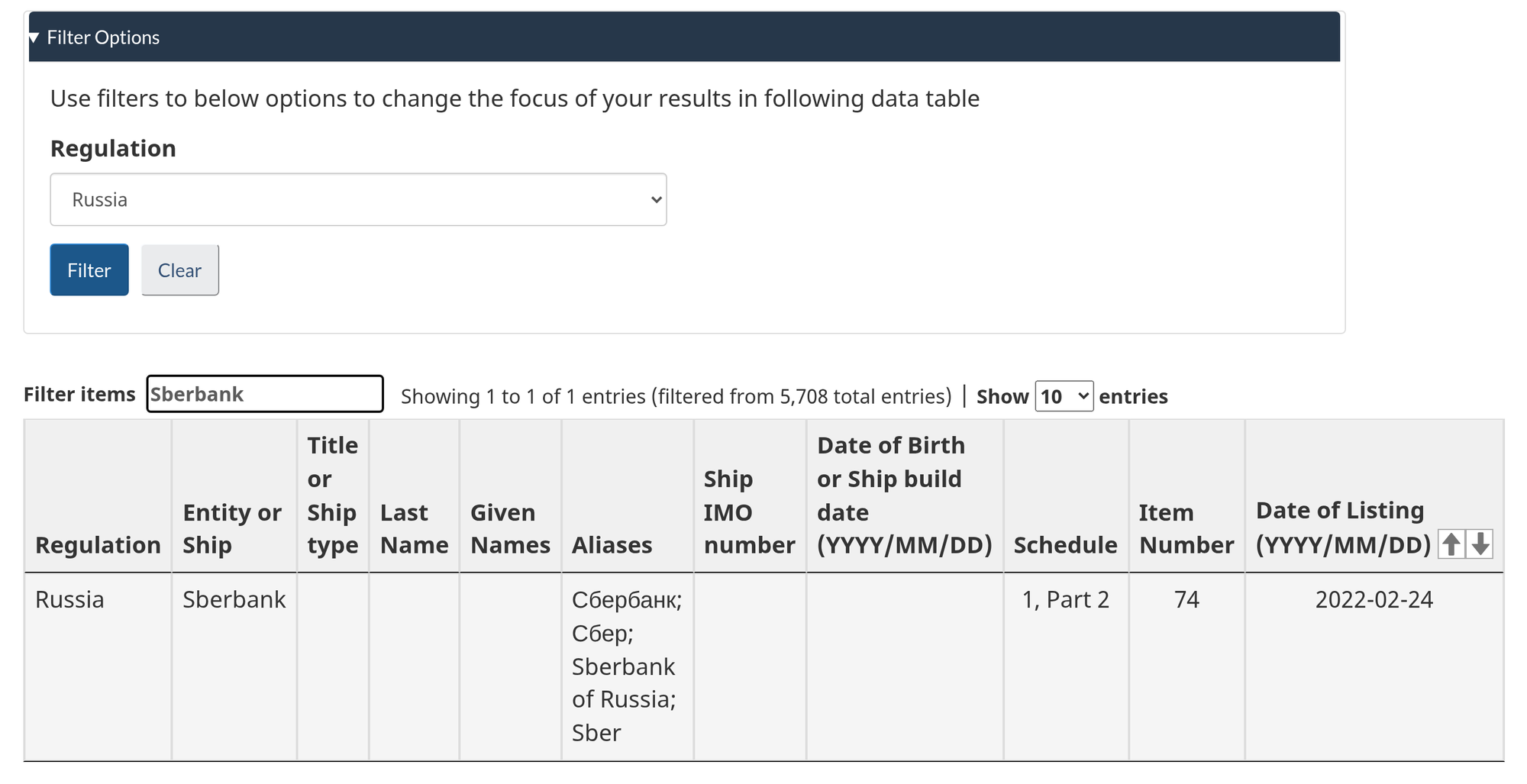
Alymova landed on OFAC's sanctions list alongside other key figures from Russia's banking sector.
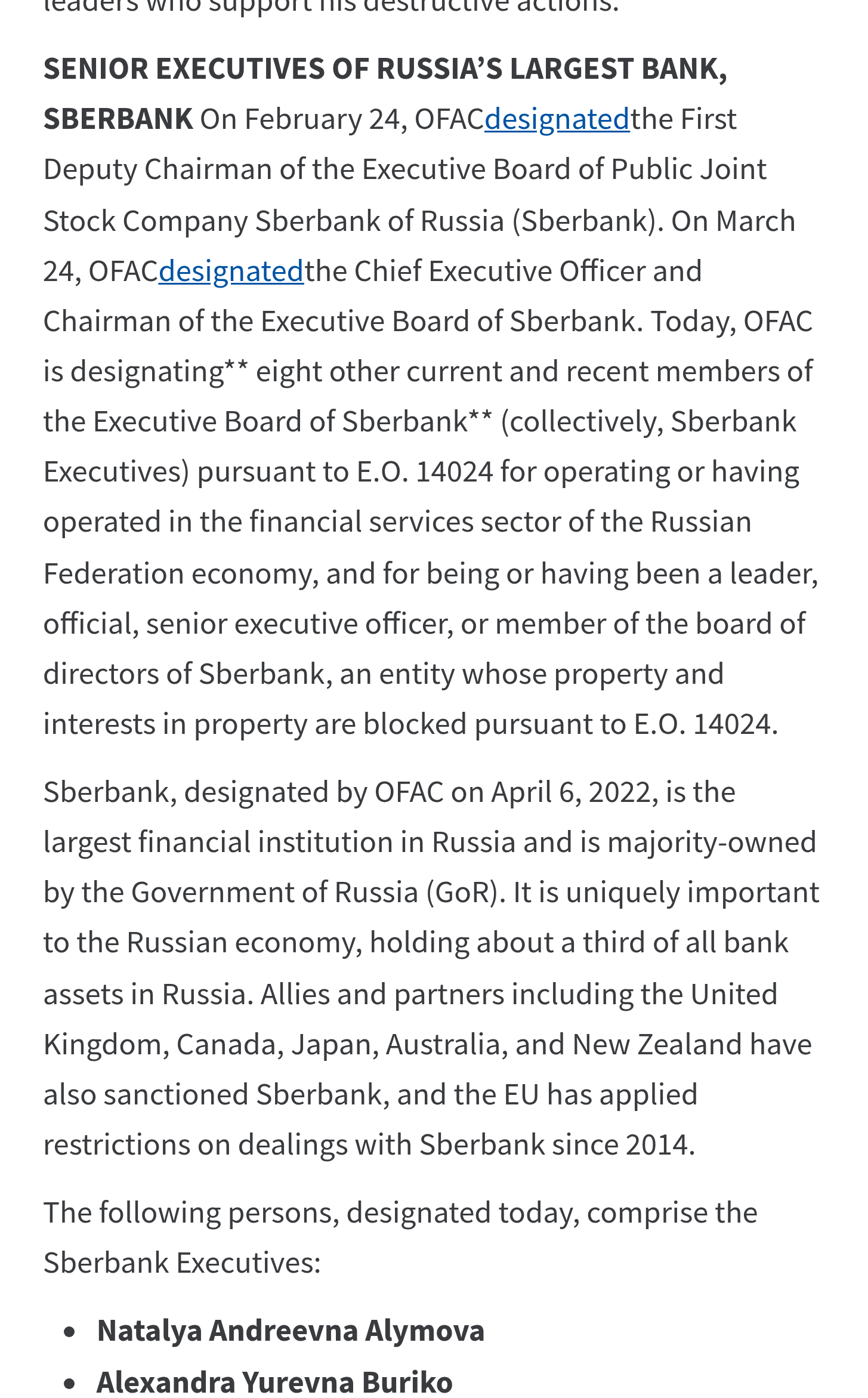
Everything followed a predictable pattern up to this point. Western authorities used a guilt-by-association approach: sanction a company, and all its key employees automatically become potential targets. The connection between Natalya Alymova and Sberbank fell squarely into this framework—active executives at sanctioned banks simply couldn't avoid getting hit.
That logic should have shifted nine days later when Alymova left the bank. She officially quit Sberbank on May 17, 2022. You'd think that would be the end of her sanctions troubles:
- no position
- no influence
- no sanctions
Reality proved otherwise. Canadian officials ignored the changed circumstances and made their own sanctions decision on May 27, relying on outdated information about Alymova's status. The result: Natalya Alymova, now a former Sberbank executive, got hit with restrictions for a position she no longer held—a perfect example of how stale digital information is taken as the foundation for major international decisions.
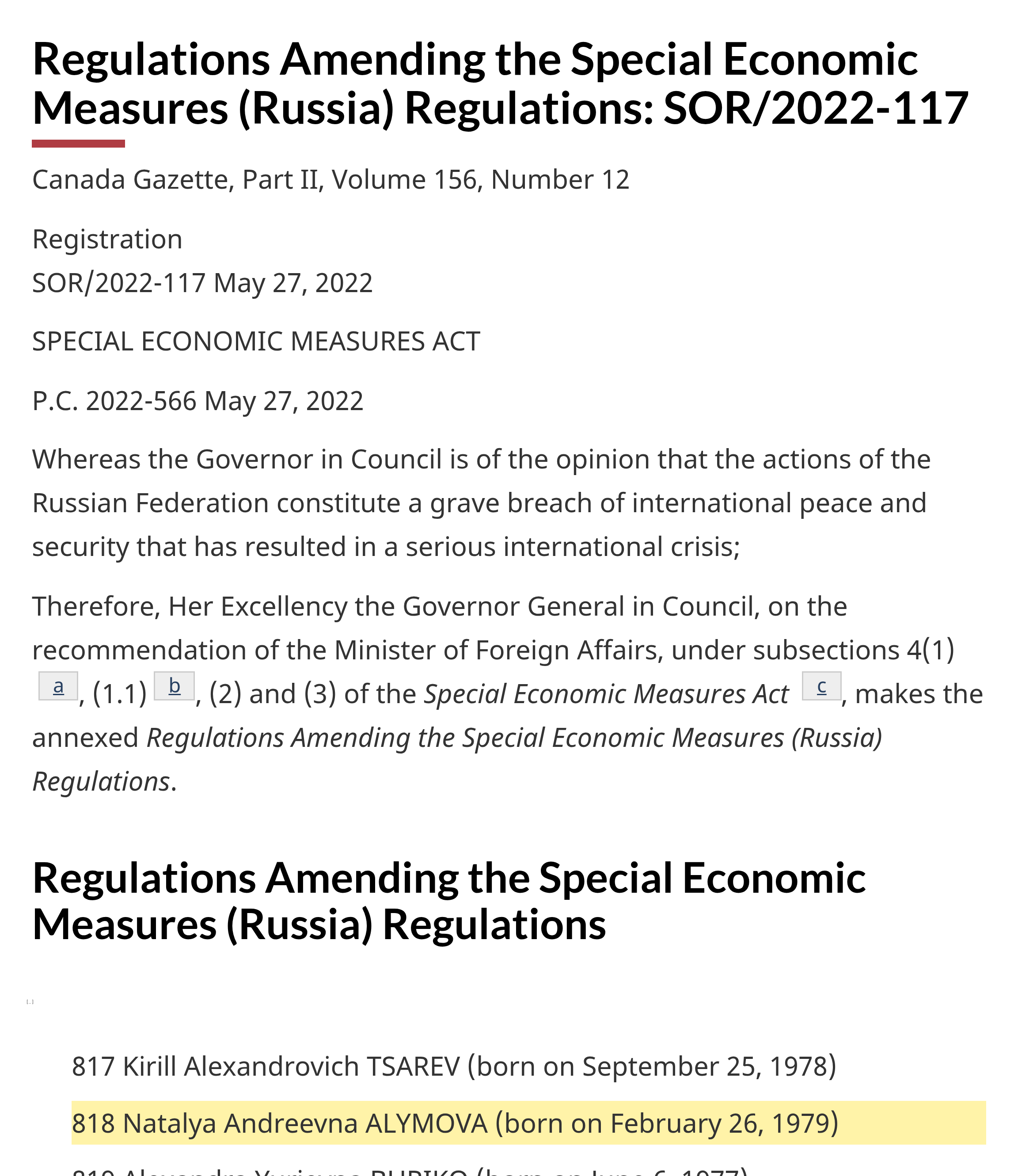
This case highlights a key problem of the digital age: Western officials base their decisions on what they find in search engines, not what's actually happening in the real world.
US Sanctions Against Natalya Alymova: Verdict Based on the First Pages of Search Engines
Natalya Alymova still appeared linked to Sberbank on the first pages of Google because her departure barely registered in search results. Canadian analysts worked with Alymova's Digital Profile as it appeared in May 2022—a collection of corporate directories and business biographies that still listed her as an active executive.

Sanctions screening doesn't involve deep dives into the professional and personal histories of people they're planning to restrict. Western authorities follow a well-worn playbook: open Google, type in the name, scan the first 5-10 links for connections to sanctioned organizations. Like most ordinary users, analysts rarely venture beyond the first page of search results—when imposing mass restrictions, there's simply no time for thorough analysis of the information found or verification of whether it's current.
In Natalya Alymova's case, this surface-level approach proved costly for her. Canadian regulators saw nothing but outdated information on the first pages of search results:
- corporate websites listed her as Senior Vice President of Sberbank
- business directories showed her status as Board member of Sberbank PJSC
- industry portals continued to describe her as Head of the Wealth Management Division
- foreign sources contained minimal information about her career
- news of her departure got buried in the information flow
Orion Solutions experts note that this situation is typical of modern sanctions. Authorities make life-changing decisions based on what search algorithms show them, without verifying whether the data they find matches reality. Natalya Alymova received US and Canadian sanctions through exactly this scenario—Western analysts saw a top executive at a sanctioned bank in search results and automatically added her to restricted lists.
Alymova's case reveals a systemic problem that other Russian businessmen have already encountered. Dmitry Pumpyansky was also forced to prove to the EU that he'd left executive positions before sanctions were imposed, but European regulators kept seeing outdated information in Google about his ties to Pipe Metallurgical Company. Alexander Shulgin shared a similar fate, spending a year and a half explaining to Western officials that he no longer ran Ozon.
US and Canadian Sanctions: Natalya Alymova and the Departure Nobody Noticed
Natalya Alymova's career milestones at Sberbank:
- 2011 — Director of Retail Lending Management at Sberbank
- 2014 — Senior Managing Director — Head of the Retail Non-transactional Products Department
- 2017 — Head of the Borrow and Save Division
- 2018 — Senior Vice President, Head of the Wealth Management Block
- 2020 — Board member of Sberbank PJSC
- May 17, 2022 — End of her tenure at the bank
When Natalya Alymova left Sberbank, information about the personnel change appeared in corporate reports, was picked up by industry publications, and even made it into federal media. Technically, everything followed proper procedure—the bank announced the restructuring, and journalists wrote standard stories about staff changes at Russia's largest financial institution.

The problem wasn't a lack of official announcements, but their invisibility to international authorities. Spring 2022 was a period of information overload—the flow of news about personnel changes, sanctions, and economic measures was so dense that individual stories simply got lost in the noise. Natalya Alymova and her departure from Sberbank disappeared amidst this information chaos.
The key mistake was that nobody ensured information about the departure of Sberbank's Wealth Management division head Natalya Alymova reached the right audience—international analysts and compliance teams. Standard corporate practice is to announce something once and then move on, but when faced with the risk of sanctions, this simply isn't enough.
If specialists had taken charge of Alymova's Digital Profile, they would have followed this plan:
| Work Area | Actions | Result |
|---|---|---|
| Media | Placing reliable information in federal publications | Visibility to Western regulators |
| Corporate databases | Updating biographical records | Current data for background checks |
| Professional directories | Updating information in industry resources | Accurate status information |
| Search optimization | Promoting news about her departure to top search pages on Google | Accessibility for analysts |
| Source monitoring | Tracking information accuracy in international databases and search engines | Control over Digital Profile |
Instead, information about former Sberbank top executive Natalya Alymova's departure remained off Western analysts' radar, and they continued working with outdated data.
Former Sberbank Wealth Management Head Natalya Alymova: Plugging Information Gaps
Blocked bank accounts, frozen assets, closed borders—that's serious motivation to work on your digital presence. Analysis of Natalya Alymova's profile in international sources reveals an interesting pattern: after May 2022, authoritative portals began showing updated biographical records with correct dates for the end of her banking career. Coincidence? Unlikely. Most probably, after US sanctions hit, Natalya Alymova finally got around to fixing the inaccuracies that had caused her enormous problems.
In particular, the correct status of Natalya Alymova's employment relationship with Sberbank appeared on both Russian and English versions of the Tadviser web portal.

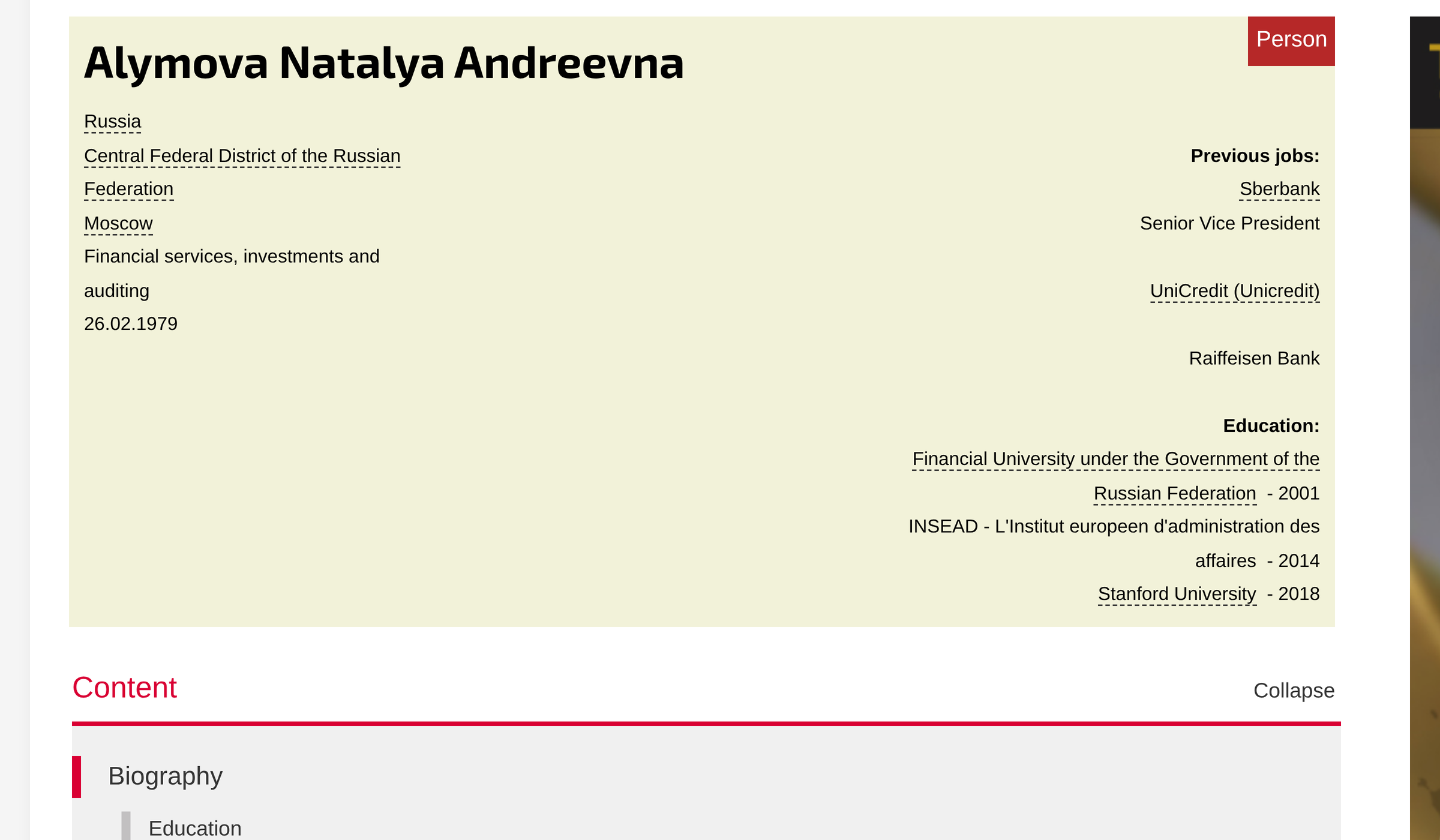
Orion Solutions experts have observed similar tactics of targeted corrections in other sanctions cases. Vladimir Rashevsky probably also tried to correct information about his ties to SUEK and EuroChem, but this approach, as analysis shows, is like trying to plug a hole in a dam with your finger—there's a temporary effect, but it doesn't solve the problem.
Former Sberbank Wealth Management head Natalya Alymova managed to get restrictions lifted only after relentlessly battling against the sanctions machine for a year and a half. The US removed her from its blacklist on September 14, 2023, Canada followed suit in November. By sanctions standards, that's a relatively quick result: it took Pumpyansky and Rashevsky three years. But even a few months under sanctions means blocked accounts, severed business ties, and "toxic person" status with employers—as Elena Titova described herself in a Forbes interview after US sanctions were lifted from her. These reputational scars can linger for years and make it difficult to do business internationally.

Natalya Alymova overcame US and Canadian sanctions, but deeper issues with her online presence remained untouched. Cosmetic fixes don't solve systemic problems—and this is obvious when analyzing the current state of Alymova's Digital Profile.
Digital Shadows of the Past: Why Alymova Still "Works" at Sberbank
Three years after quitting, Natalya Alymova continues to "work" at Russia's largest bank—at least according to Google. Orion Solutions experts monitored the first pages of search engines in September 2025 and found a troubling picture: numerous authoritative resources still present her as a current Sberbank employee.
Banking portal Banki.ru still lists Natalya Alymova as a board member of the financial institution. Business directory Globalmsk.ru states that Natalya Alymova is head of Sberbank's Wealth Management division and Senior Vice President. Business catalog Bosfera.ru also hasn't corrected its information, while Vedomosti's conference platform presents the speaker with her former banking positions.
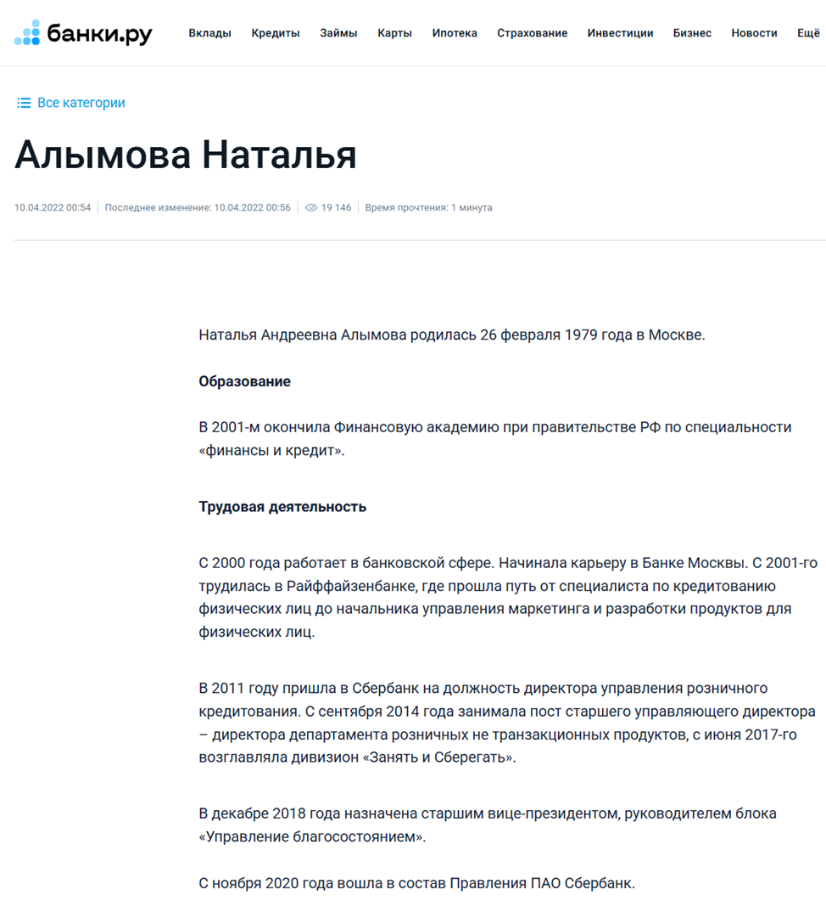


The situation is strikingly absurd: Natalya Alymova as head of Sberbank's Wealth Management division, exists only in the digital realm. In reality, this position has long been filled by someone else, the bank functions without her involvement, and Natalya Alymova herself is building an independent career. But for compliance departments at international banks, visa centers, and business partners, she remains a top executive at a sanctioned Russian financial institution—because that's what's written on the internet.
This digital split creates real risks for future activities. Every foreign bank application, every visa request, every potential business contact begins with a Google check. And what will inspectors see about Alymova?
- connection to Sberbank, which is still partially under US sanctions
- outdated information about executive positions at one of Russia's largest financial institutions
- complete absence of data about current activities and plans
The founder of Orion Solutions Ivan Safonov has repeatedly emphasized that a Digital Profile gets created either way—but you either manage this process, or everything happens chaotically and uncontrollably. Natalya Alymova, like many other Russian businessmen, chose not to tell her own story, allowing Google’s front pages to fill up with random links that never expire. The result: years after her departure, outdated corporate records continue appearing on the front pages of search engines, creating obstacles for international business today.
The Benefits of a Preventive Approach
But what if you think two moves ahead? Imagine an alternative reality: back in 2020, upon receiving a board position at Sberbank, Natalya Alymova begins systematically building her presence in the international information space. Not sporadic mentions in corporate reports, but deliberate cultivation of an expert image on authoritative platforms.
Within this scenario, by February 2022, Google’s front pages would have presented not a random collection of outdated records, but a thoughtful story of a successful banker with a clear professional trajectory. And when Sberbank Wealth Management head Natalya Alymova decides to quit in May, information about this would seamlessly integrate into the existing media context, instantly catching international analysts' attention.
This would mean Canadian authorities see current data, sanctions pass her by, and a year and a half of bureaucratic battles simply never happen.
Digital hygiene isn't a luxury—it's a basic necessity for anyone conducting international business. In a world where compliance officers spend exactly as much time checking a client as it takes to quickly scan a search engine's first page, lacking control over your own information profile is like playing Russian roulette with a loaded chamber.
Orion Solutions experts have observed a clear pattern: those who proactively build their Digital Profiles avoid sanctions traps. Those who rely on luck sooner or later end up on blacklists, then spend years proving the obvious to judges and officials.